

This article explains why hemp is considered a functional nutrition ingredient and explores the nutritional properties of hemp seeds, including complete plant protein, essential fatty acids, and bioactive plant compounds.
Hemp is increasingly recognised as a powerful example of functional nutrition. Functional foods are foods that provide more than basic nutrition, they contain naturally occurring compounds that may help support overall wellbeing.
Hemp seeds are particularly valued because they contain a unique combination of complete plant protein, essential fatty acids, fibre, and micronutrients.
Because of this balanced nutritional profile, hemp has become popular among people looking for plant-based nutrition that supports modern health and active lifestyles.
What Is Functional Nutrition?
Functional nutrition focuses on foods that provide additional benefits beyond simple calories or basic nutrients.
These foods often contain naturally occurring compounds that may help support different systems in the body, such as:
- metabolism
• muscle function
• cardiovascular health
• immune balance
• energy production
Hemp is considered a functional food because its seeds contain a combination of protein, healthy fats, and bioactive plant compounds that contribute to overall nutritional value.
Hemp Is a Complete Plant Protein
One of the most important nutritional qualities of hemp is its high-quality plant protein.
Unlike many plant proteins, hemp contains all nine essential amino acids, making it a complete protein source.
Essential amino acids are required by the body for important biological processes including:
- muscle repair
• enzyme production
• tissue growth
• hormone regulation
Because of this, hemp protein has become increasingly popular among people looking for plant-based protein sources that support active lifestyles.
Essential Fatty Acids in Hemp Seeds
Hemp seeds are also well known for their healthy fatty acid profile.
They contain both omega-6 and omega-3 fatty acids in a ratio considered beneficial for human nutrition.
Omega fatty acids play important roles in:
- cell structure
• cardiovascular health
• metabolic balance
• inflammatory regulation
Research also suggests that omega-3 fatty acids found in hemp seeds may influence metabolic pathways involved in inflammation and gut health.
Because of these properties, hemp seeds are commonly included in diets focused on supporting heart health and metabolic wellbeing.
Bioactive Compounds in Hemp
Beyond protein and fats, hemp seeds contain a range of bioactive plant compounds.
These compounds include antioxidants, plant sterols, and peptides that are formed when hemp protein is digested.
Scientific studies have shown that hemp seed protein peptides may influence metabolic processes related to lipid metabolism and glucose regulation.
While research is ongoing, these findings help explain why hemp is often described as a functional nutrition ingredient rather than just a simple food source.
Why Hemp Is Popular in Modern Diets
In recent years, hemp has become increasingly popular among people interested in:
- plant-based nutrition
• whole food diets
• sustainable agriculture
• natural sources of protein
Hemp plants are also environmentally resilient and require relatively low agricultural inputs compared with many other crops.
This makes hemp an attractive ingredient for both health-conscious consumers and sustainable food systems.
Hemp Protein and Active Lifestyles
Protein is an essential nutrient for maintaining muscle health and supporting recovery after physical activity.
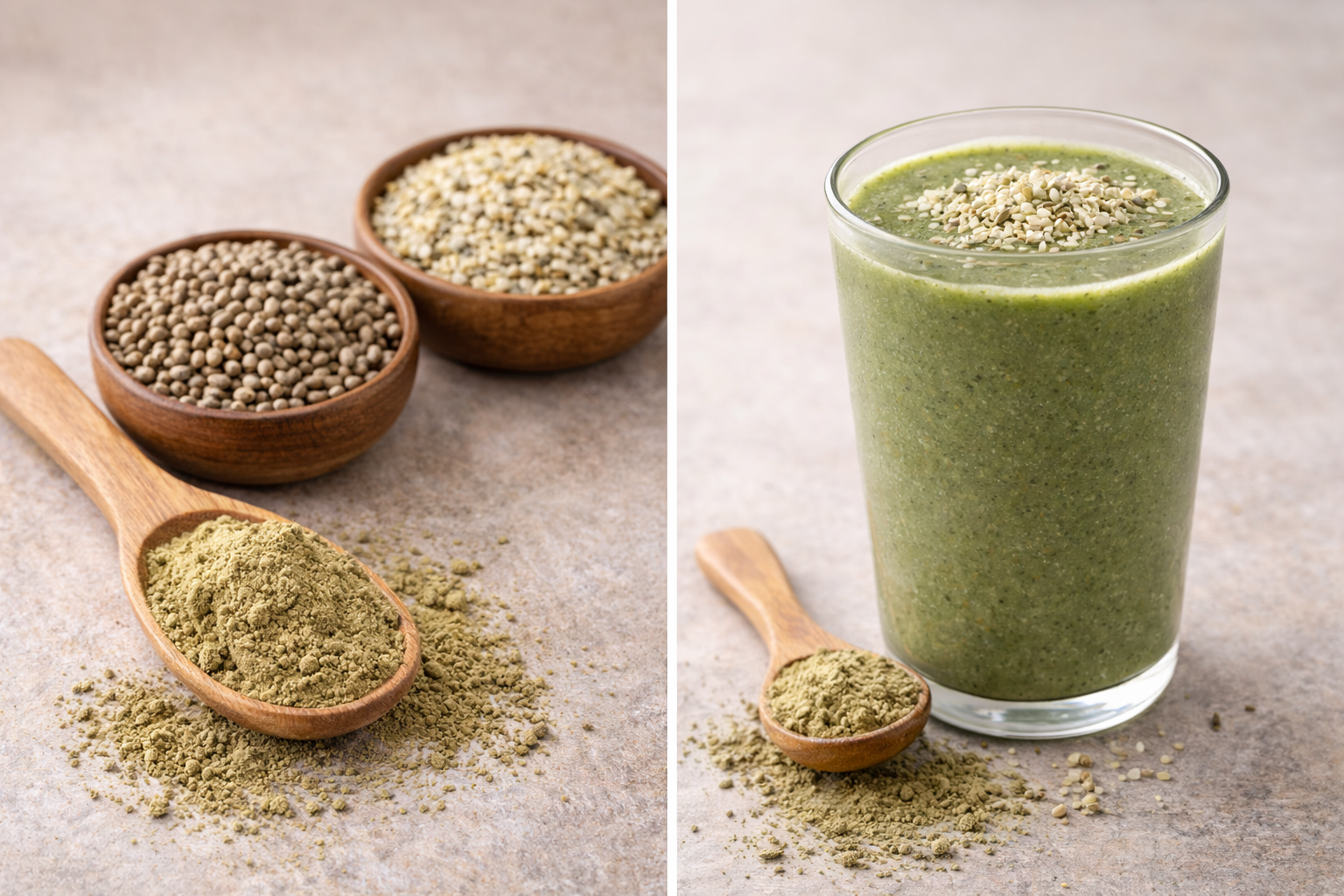
Because hemp provides a complete amino acid profile along with fibre and healthy fats, many people choose hemp protein products as part of their nutrition routine.
Hemp protein powders and hemp-based foods are often used in:
- smoothies
• plant-based shakes
• functional nutrition products
• sports nutrition
For people looking for plant-based options, hemp offers a nutritionally balanced protein source that fits well within modern dietary trends.
- Uncategorized
Hemp Seed Oil (250ml/500ml)
Price range: $23.95 through $36.95 inc GST Select options This product has multiple variants. The options may be chosen on the product page - Uncategorized
Raw Hulled Hemp Seeds (450g/900g)
Price range: $31.95 through $47.95 inc GST Select options This product has multiple variants. The options may be chosen on the product page


Common Questions About Hemp Nutrition
Is hemp protein a complete protein?
Yes. Hemp protein contains all nine essential amino acids, making it a complete plant protein source.
Why are hemp seeds considered functional nutrition?
Hemp seeds contain a combination of protein, healthy fats, fibre, and bioactive plant compounds that contribute to their nutritional value.
Is hemp good for plant-based diets?
Hemp is commonly used in plant-based diets because it provides complete protein and essential fatty acids.
A Nutrient-Dense Food for Modern Wellbeing
Hemp seeds represent a powerful example of how traditional plant foods can meet modern nutritional needs.
Their combination of complete plant protein, essential fatty acids, fibre, and bioactive compounds makes hemp one of the most versatile functional foods available today.
As interest in plant-based nutrition continues to grow, hemp is likely to remain an important ingredient for people seeking nutrient-dense foods that support balanced diets and active lifestyles.
Resources
All our research is from reputable sources from governing sites
Ben Necib R, Manca C, Lacroix S, Martin C, Flamand N, Di Marzo V, Silvestri C. Hemp seed significantly modulates the endocannabinoidome and produces beneficial metabolic effects with improved intestinal barrier function and decreased inflammation in mice under a high-fat, high-sucrose diet as compared with linseed. Front Immunol. 2022 Sep 26;13:882455. doi: 10.3389/fimmu.2022.882455. PMID: 36238310; PMCID: PMC9552265.
Hossain L, Whitney K, Simsek S. Hemp seed as an emerging source of nutritious functional ingredients. Crit Rev Food Sci Nutr. 2026;66(5):933-949. doi: 10.1080/10408398.2025.2534839. Epub 2025 Jul 23. PMID: 40699152.
Liu M, Li Y, Li W, Tao Q, Liu F, Zhou J, Yan Z, Zhang X, Yang H, Li S, Wang Z. Hemp seed protein exerts its hypoglycemic and hypolipidemic effects through degradation into short peptides. Food Chem. 2025 Aug 30;484:144406. doi: 10.1016/j.foodchem.2025.144406. Epub 2025 Apr 18. PMID: 40279904.


